Sunday Service: In-person and Online Sunday at 10:30am

REAL Recommends…

SURJ (Showing Up for Racial Justice)
Hold Dec 10 to attend the SURJ training on accountability, privilege, and the movement for racial justice. The purpose of the workshop is to increase racial consciousness among whites and get more white folk in Chicago active in the fight for racial justice. The event is open to the public but the content will be geared toward addressing whiteness and White people’s position as oppressors. Look for location and time information in the coming days.

Bystander Intervention Workshop
Hollaback (ihollaback.org) is an organization and movement to end harassment in public spaces. They offer training on how to help someone who is the target of harassment in the moment of the harassment. Haven’t we all said to ourselves, “I wish I knew what to say/do”? Go to ihollaback.org and look for BYSTANDER INTERVENTION TRAINING WEBINAR. Tuesday, Nov. 29 from 12:00pm to 1:00pm Central time. They ask for a small donation (of any size) to participate.

YWCA Evanston/Northshore
Lots of ways to take advantage of the YWCA’s programs to eliminate racism and empower women, stand up for social justice, help families, and strengthen communities is as relevant as ever. Here are some things you could do to become part of that mission:
1. Go to a Let’s Talk @ Lunch: bit.ly/TalkatLunch
2. Sign up for YWCA’s monthly e-newsletter here: bit.ly/YWCA-News
3. Become a donor and support the issues you care about: bit.ly/GivetoYWCA

REAL Recommends…2017-05-24T14:18:45+00:00

Long Range Plan Update: Phase 2

Congrats to all of the 30 teams in UCE who went through the Long Range Planning process earlier this year. The Councils and the Board have assimilated all of your great plans and we are now ready for Phase 2. But first, let’s talk about the outcomes of the plans and process.

Phase 1: Long Range Planning Process
After leaders and representatives from the church teams were trained in how to facilitate the brainstorming process, they held 5-Year Long Range Planning meetings with their teams. Reports were that they came up with new ideas, heightened their energy around goals, helped to prioritize and created an enthusiasm for the future. Additionally, it was a great way for 3 young teams to set themselves up for success. As the teams brought their plans to the Councils, they were able to see where there was overlap and create collaboration and coordination. We are asking every team to revisit their Plans every 6 months…around January and June. Want to see other team’s Plans? Just go to the UCE website in the “Members & Friends” top tab, then the “Leadership & Governance” sub-tab.

Phase 2: Long Range Plan Project Evaluation
In order to bring many of the great ideas and projects to fruition, we need to get specific on priorities, what it would cost, what efforts it would require etc. So the Integrated Stewardship Council (ISC) is putting together a Long Range Plan Project Evaluation Team to work with all teams who have projects that would require funding or have other major impacts on the church. Some projects will need professionals to assess the projected costs. Other projects may involve changes in our church building that could affect multiple teams and many congregants.

Phase 3: Capital Campaign
Once we have more specifics for what our great plans will cost, then we’ll create a Capital Campaign Team that will help to guide us through the fund raising process.

In the meantime, the teams are progressing forward with great energy on many of their plans that can be accomplished with current funds and volunteers. We’ve observed that this process has helped to take UCE’s energy and excitement to live our Mission “To nurture the human spirit for a world made whole” to an even higher level.

Long Range Plan Update: Phase 22017-05-24T14:18:45+00:00

UCE Mitten Tree

mitten-treeUCE’s Mitten Tree has collected gifts and holiday food for over 25 years and is a wonderful tradition of generosity for those who need help during the holiday season. Contributing generously not only helps those in need but helps each of us add to the love in our hearts during the holiday season. Paper mittens (with the wished for items noted) will be available from at tables at the back of the sanctuary. Please bring your new, unwrapped gifts to UCE as soon as you purchase them. The final deadline for bringing gifts is Dec. 3, 2023. We are providing gifts and food for nine groups this year.
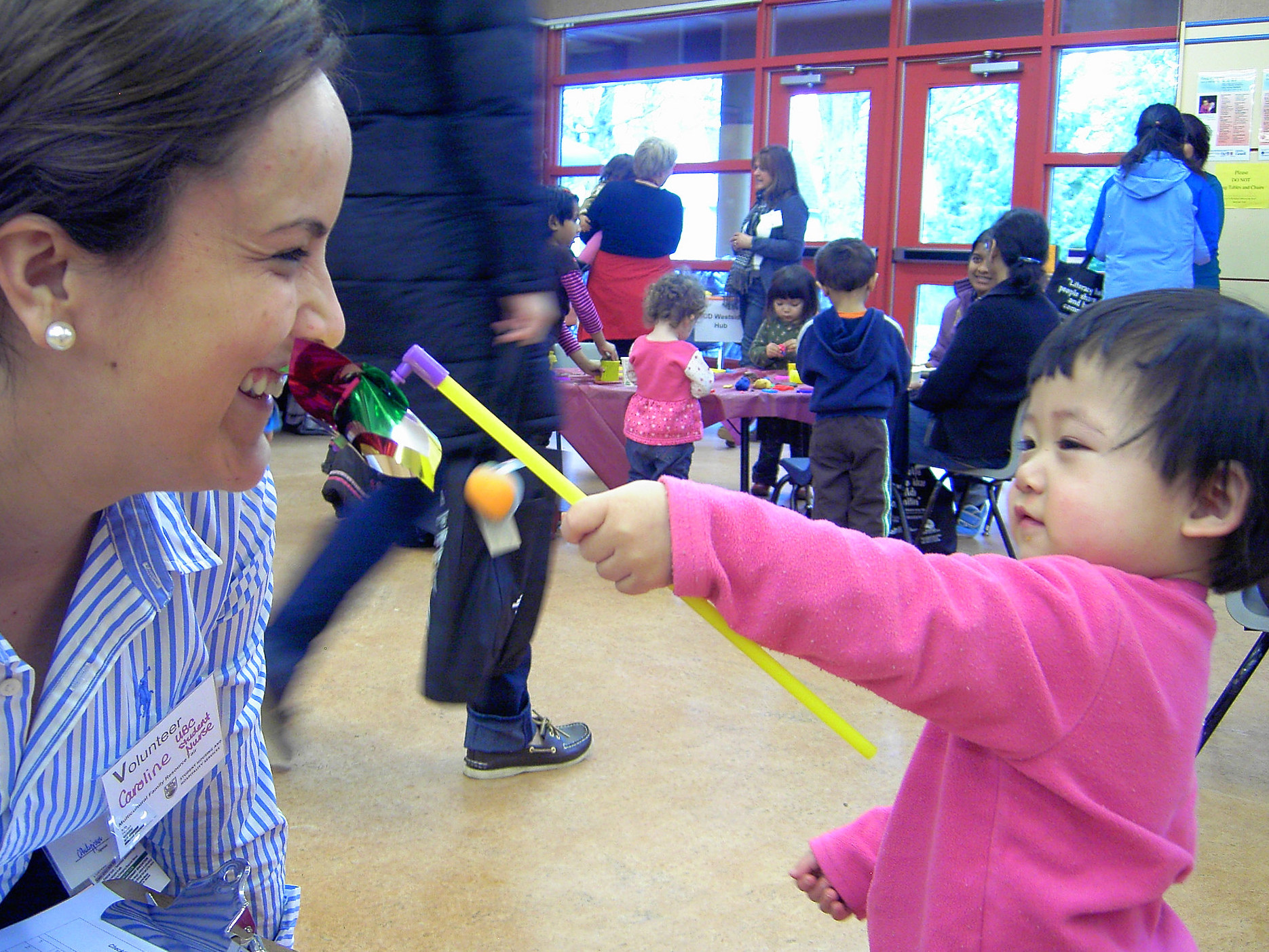
Volunteers are needed to help at the Mitten Tree tables on Sundays and to sort, wrap, and deliver gifts.

If you wish to volunteer please contact Alice Swan. If you have questions about Mitten Tree please contact Carol Nielsen.

UCE Mitten Tree2023-12-01T21:53:30+00:00

Bike the Ridge

Summer may be ending, but UCE members can look forward to Evanston’s fall event: Bike the Ridge.This Sunday, September 25 from 9:00-1:00pm, Ridge Avenue between Howard and Church will be closed to vehicular traffic for “Bike the Ridge.”

This event is an excellent community building opportunity for UCE. Hundreds of people will be biking by UCE’s doorstep; let’s give them a UCE welcome!  We will have a tent set up on Ridge.  Here UCE members can greet bikers, supply them with water and cookies, and provide information about the church. We need lots of friendly faces on Ridge to represent UCE!

Please consider biking to church that day.  There will be a monitored bike corral in the grassy area behind the sanctuary.  Having Ridge closed to vehicular traffic is an excellent opportunity to support environmental sustainability by biking to church.

For both our community members and UCE members, there will be bike decorating on the church lawn.  Anyone who stops by can decorate their bikes with streamers, pipe cleaners, or ribbons.

With us again this year will be members of The Recyclery Collective.  The Recyclery will also be the Shared Plate Recipient that day.  The Recylery is an educational bike shop that provides a space for empowerment through education, transportation, and community building.  The shop offers Open Hours, Volunteer Hours, Spanish Open Hours, and Youth Programming.  There is an “Earn a Bike” program where youth can log volunteer hours to earn a reconditioned bike.  Reconditioned bikes can be purchased through the shop and a number of bikes are designated for those who cannot afford them.  Please stop by and meet our friends from The Recyclery.

Please volunteer for this community-building event!  We need the following:  1) volunteers to help decorate bikes, 2) volunteers to organize and monitor members’ bikes in our bike corral, 3) volunteers to greet bikers, distribute water and information about the church on Ridge or 4) contributions of materials—streamers, pipe cleaners, old playing cards, scotch tape, water, etc.

Please contact Jessica Tomell-Presto to volunteer or with any questions: prestomgk@comcast.net.

Bike the Ridge2016-09-22T19:17:25+00:00

Reparations Study Advocacy at General Assembly

Submitted by: Tom Hempfling

Our Reparations Study Action of Immediate Witness (AIW) did not get enough votes to be one of the three approved AIWs at the 2016 UUA General Assembly.   (The three approved AIWs were: expressing solidarity with Muslims, advocating gun reform, and affirming support for transgender people).   We were encouraged that the Counsel for Social Witness staff chose to include the Reparations Study AIW as one of the six that were voted on by all delegates, and our team collected the most nominating signatures of any of the AIWs.    For some delegates, the Reparations Study proposal did not meet the test of immediacy as well as the three adopted AIWs.

We believe circulating the petition was a good experience for our delegation — it got us in touch with the Black UU and the Allies groups and honed our understanding of the bill.  We are determined to continue with a long-term sustainable approach for this effort–one that is focused, yet recognizes valid opportunities for synergies.

UUs for a Just Economic Community chose Reparations as one of the issues to continue work on, including holding a lobby day / conference in Washington, DC in April, 2017.   We have engaged with a trustee of UUJEC with the intention of seeing how Reparations Study Advocacy might be folded into its work and how we can further support it.   The New Orleans GA in June of 2017 will be a “Justice GA” like the GA in Phoenix two years ago with opportunities for greater follow-up.

Reparations Study Advocacy at General Assembly2016-09-26T16:21:52+00:00

Sunday, July 17, 2016, 10:00am

“Freedom and Obligation”
Freedom is a cherished ideal in our country and in our Unitarian Universalist movement. Our fourth principle calls us to affirm and promote the free and responsible search for truth and meaning, but while we champion freedom, our obligation to one another may be more challenging to embrace. How do we hold the pursuit of real freedom for each in tension with our obligation to the good of all? Eileen Wiviott speaking.

July 17, 2016 – “Freedom and Obligation” – Eileen Wiviott

Sunday, July 17, 2016, 10:00am2016-07-28T17:22:21+00:00

Be a Blessing: Service February 28th

In the book of Genesis, God says to Abram, “and you shall be a blessing.” Rachel Naomi Remen writes, “We are all born to be a blessing.” What does it mean to bless each other, and bless the world, with our lives? A member volunteers with us at a local Head Start.

Join us for the hands-on adventure of this all-ages service of blessing led by Joy Justicia, our religious educator along with our all-ages worship team. You are invited to bring any of the following “blessing ingredients” to the service:

  • Canned goods to give away
  • Pieces of colorful yarn
  • Pieces of colorful tissue paper
  • Live flowers
  • Small smooth stones

Whether you’re able to bring something or not, you’ll depart with something amazing. Questions? Contact Joy Justicia.

Be a Blessing: Service February 28th2017-05-24T14:18:47+00:00

PETITION FOR UCE SUPPORT OF REPARATIONS STUDY

“Where common memory is lacking, where people do not share in the same past, there can be no community. Where community is to be formed, common memory must be created.” — Georges Erasmus, Canadian Aboriginal Leader

Beginning on January 10, several members of the Reparations Study Team will offer you the opportunity to sign your name on a petition for UCE to express support for legislation introduced to the U.S. House of Representatives by Rep. John Conyers, Jr., HR 40, entitled: “The Commission to Study Reparation Proposals for African Americans Act.” If such a resolution is approved at a Congregational meeting, we will inform elected representatives and others, and seek follow-up actions with the UUA.

• The legislation would establish a study of the economic deprivation and physical and emotional suffering of the descendants of slaves, including through Federal Government policies.
• A key component is education–to help Americans move toward a “common memory.”
• If reparations are enacted, the form they could take might not involve payments to individuals but rather programs such as job training linked to public works that include racial justice in their mission.

Many of us at UCE have become more aware of parts of our country’s history that are often downplayed, for example the enormous impact of slave labor in creating our nation’s wealth. There is a plausible case that slave labor and the invention of the cotton gin in 1793 precipitated the industrial revolution. The first recognizable factories were built to mass produce textiles with the cheap cotton made possible by slave labor. As late as 1860, slaves as an asset were worth more than all of America’s manufacturing and railroads put together.

In “The Warmth of Other Suns,” by Isabel Wilkerson, we read first-hand accounts of life in the Jim Crow South, a euphemism for terrorism.

And we learned about systemic economic obstacles for blacks through at least the 1970’s that whites did not face. One example: New Deal housing and mortgage programs enabled a tremendous increase in home ownership in the U.S. But these Federal agencies instituted redlining and supported restrictive covenants, generating self-fulfilling prophesies for black neighborhoods to lose value over time while white neighborhoods gained value, and where homes could become family nest eggs. Meanwhile black home buyers were driven into the arms of unscrupulous contract sellers; such homes became money pits with debt creation instead of wealth creation.

Yes, there are people who have their minds closed. But if we have an orthodoxy, it is that opinions and attitudes can change enough to make a difference. Facing this question of reparations would, as Ta-Nehisi Coates has written, “represent America’s maturation out of the childhood myth of its innocence into a wisdom worthy of its founders.” Only then can our country exorcize these terrible demons of its past.

Tom Hempfling

PETITION FOR UCE SUPPORT OF REPARATIONS STUDY2017-05-24T14:18:47+00:00

Sunday, August 12, 2012

“Reaching Through Walls” Eileen Wiviott speaking.

August 12, 2012

SERMON – “Reaching Through Walls” – Eileen Wiviott 8-12-12

We love to sort things, don’t we? We love to define things, categorize, put things into neat little boxes, including other people and ourselves. It’s our way of trying to make order out of chaos, to try to understand the world and our place in it. We look to define things, to put walls around our selves and each other, as a way of making sense and finding meaning.

The illusion of separateness and the creation of false differences go back to the earliest civilizations. Divide and conquer is the oldest trick in the book if you want to oppress others and accumulate power. Think of the Roman Empire, slavery, Jim Crow laws, mass incarceration, the border between the United States and Mexico, the Berlin Wall, the wall between Israel and Palestine.

We human beings are binary thinkers. We have evolved from animals who utilized a very concrete, either/or, yes or no, way of thinking, which has allowed us to survive and evolve. If a cheetah is chasing you, you don’t want to carefully weigh multiple options, you want to make a split second, either/or decision – either run or fight. However, even though we’ve evolved higher and more complex ways of thinking, we fall back on that binary thinking far too easily. We are still wired to look for definite answers, clear categories, to put sturdy boundaries around our ideas and beliefs. We are good at building walls. We build them to keep some people out and to keep some people in. We build them to protect ourselves from the elements – wind, rain, and snow. We build them to protect ourselves from each other, to feel safe, secure, and comfortable. We build them to support, to provide structure and order. We build walls out of concrete and steel, out of ideas, out of relationships, out of beliefs. Putting up walls can be a pejorative term but walls aren’t all bad. They are useful and important, but without windows or doors in those walls, to allow the air, the light, and the ideas to move in and out, walls can stifle and imprison us.

We sit inside these walls right now. The walls of our church, a place where relationships are nurtured, where we practice living out a covenant of love and service to the world, which we carry outside of these walls. We seek continually to make these walls feel open and embracing to all who might find shelter and comfort within them. These walls keep us warm in the winter, cool in the summer. They provide a place of beauty, of respite, of comfort. However, were we to close these walls off from light, to refuse to let newcomers in or keep people out based on different views, different lifestyles, or expressions, we would surely die as a community.

The walls of a cell provide the necessary support and protection for the functioning organelles within the cell to get what they need, to let go of what they must in order to multiply and grow, to thrive. All of life depends on the thriving of cells, and thus the permeability of their walls. How do we make our walls more permeable – the walls we build in our minds to define, categorize and shut out others? We can’t tear every wall down, but there are several things that make the walls that separate us more permeable so that they are like the walls of plant and animal cells rather than the walls of a prison cell.

Music, drama, art, books can breath life into rigid barriers. The arts build a common ground, allow us to reach across divisions and feel a sense of connection. Service is another way of putting windows in our walls. When we serve together toward a common cause, we reach across barriers to remind each other of our common humanity, the goodness that we share.

Authentic conversation across differences can be one of the most powerful ways of permeating the walls that we build to separate and divide, walls across race, gender, sexual orientation, class, education and experience. We need to talk to each other. We need to learn from each other. We need to be open to each other. Not just people we find interesting and who we agree with. We need to talk to people who are markedly different from us. Not to change their minds, as much as we’d like to, but to be willing to have our own mind changed. It’s not always a matter of tearing down walls, of letting go of what we feel is right, of diminishing our commitment to our values. It is a matter of seeing that there is a human being on the other side of the conversation. That another person with different values does not threaten ours. Maybe that conversation makes us even more committed to our own values while at the same time holding that person with respect and love. If one of our values is the inherent worth and dignity of every person, here’s a great time to practice it, with those who would most challenge that value for our binary thinking brains.

I have four brothers. All of them are older than me. Two of my brothers are on my side of the political wall and two are on the other side of the wall.  I love all of my brothers but one of my brothers, Matt, is special to me. He was always nicest to me. He was the only brother to pay attention to me, to protect me from my brother Brian who was mercilessly cruel to me (I’m exaggerating but it felt merciless in the dramatic throws of childhood). Matt is one of the most generous and kind people I know. He is loving, affectionate, smart and very competent. I love him very much and I know that he loves me and I know he is a good person.  Guess what side of the wall he’s on? He’s on the other side of the wall and he loves to give me a hard time about my side of the wall. I usually don’t engage, laugh it off, rather than try to argue my position. Mostly because I don’t feel I’m very good at it and partly because I don’t want to lose my cool and damage my relationship with him. But I carry him with me. When I am hearing about economic injustice, about strident and ineffectual politics, about the impasses we continually come to as we see each other as opposition rather than human beings. I can very easily put people that share my brother’s political views in a box and make generalizations like, “None of them care about anything but themselves.” But I know that’s not true because I know that’s not true about Matt. I am trying to think of ways I can communicate my point of view while holding onto the love I have for him. Loving Matt makes me want to learn how to maintain the integrity of my values while trusting that I can explore my views, even poke holes in the certainties, so that I can see another view without losing the strength I feel in my convictions. Love can be a window maker. Love can permeate walls. My brother made a window in a wall that might have stood between us. He put that window in by loving me, reaching out continually, and listening. I chose to look through the window and see his face, hear his voice.

The walls of religion can be impenetrable, made of fixed and solid belief mortared by intolerance to questions. We can see those walls and choose to turn away from them or we can try to put some windows in those walls. Rather than tearing down the entire structure of religion, Christianity or any other specific religion, it is our responsibility as religious people to build windows and doors in our understanding of religion so that we can better see those who live within, and maybe ourselves a bit better too.

My religious and spiritual journey is like any other in that I have been searching for understanding and meaning, to give order and direction to my life. When I was a child, sitting in the pews of my Catholic church, I wanted very much to feel at home in that place, within those boundaries and walls of that religious house. I said the words of the creed we all spoke, glancing from side to side, wondering if anyone could see that my doubt was showing. I longed to experience faith and feel the comfort of its walls.

I wasn’t sure how I missed the line where God was handing out belief and I really didn’t know how I was supposed to get that belief. I thought that belief meant you knew for sure, with absolute certainty that something was true and that you felt it in your heart. It didn’t occur to me that belief had any room for doubt, questioning, and discovering meaning.  For many years, I felt there was no place in my life for a religious community, because I could not imagine one where the walls could be flexible and permeable. In my mind the only kind of religious community was one with fixed and solid brick walls. Like my rigid concept of belief, religion itself was something I chose to be shut out of rather than locked into. I climbed over the wall of faith and walked away from it, only to find that my journey put it right in front of me again. Now, facing faith and whatever draws me back to this concept, I want to make a window and let some light pour in.

When I found this religious community and saw that there could be a different way of being religious, which included questioning, and valuing of openness rather than certainty, I felt at home. Within the safety of the walls of this community, I have found the courage to examine my religious and theological boundaries and try to open up some windows and doors.  Being a part of this religious community has led me to seminary, where I am constantly challenged to examine the walls around my beliefs and to make them more porous.

This spring I took a Christian Scriptures course, for which I read the New Testament (for the first time in my life) along with six other books on HOW to read the New Testament. There were some basic questions that I wrestled with throughout my study, “What is it about this book? What is it that has everyone so excited and drives many to so fiercely defend it? And because it is so vehemently defended as the only truth, does that mean that those of us open to uncertainty should disregard it entirely? What, if any, is it’s meaning and purpose in my life?” Finally, it was time for me to explore these questions, chipping through my own thick walls about belief, faith, and doubt, and to confront the message that I was going to hell for not believing. And even though I had long ago dismissed that idea, I very much came face to face with those specters of my religious past as I read passages like John 3:18 – “Those who believe in him are not condemned; but those who do not believe are condemned already, because they have not believed in the name of the only Son of God.” I find that kind of certainty intimidating, like facing a solid brick wall. My binary thinking reactions are to feel first afraid – to hear it as truth and therefore question my own belief and resulting condemnation or salvation and then, secondly rebel against it and dismiss it entirely. Neither option allows me to examine the passage in its context, to find possible alternate meanings or uses.

Reading the bible was painful but it was like taking out a splinter. I have had these theological questions all my life and they’ve never gone away even though I’ve tried to ignore them. They were just buried in my heel, making it uncomfortable to walk my path. So to take it out and really examine the belief system I was raised in, to recognize that I wasn’t making up the message that I was going to hell if I didn’t believe, was in some ways a relief.

As I began to understand the historical context of the bible, that these were people, just like us, trying to make sense and find order in a very uncertain world, I began to understand the desire for absolute certainty, then and now. I started to hear, as I read through the stories and letters of the Christian bible, that belief is not absolute certainty, and faith is not exactly the same as belief. Belief can exist with doubt and questions or it can be more immovable.  But faith, to me, is a way of being in the world. It is a trusting without any tangible proof that something is real. I was struck by one passage in Paul’s letter to the Romans, Chapter 8, verses 18-27.

Paul was a Pharisee, which was a Jewish holy man charged with interpreting and upholding the Jewish laws. These were laws about what it meant to be Jewish – laws about what to eat, where to pray, what to wear, laws about marriage and circumcision.  Paul was very strict in his interpretation of the laws and very good and persecuting those who did not follow them. The story of Paul, as described by Luke, is that he met the resurrected Jesus on the road to Damascus, and was converted instantly. He gave up his life as a Pharisee and wrote a bunch of letters to churches explaining why and how they should follow Jesus. These letters became the foundational beliefs and teachings of Christianity. In his letter to the Romans, he talks about hope and faith, which are words I can embrace more easily than belief. Paul says, “For in hope we were saved. Now hope that is seen is not hope. For who hopes for what is seen? But if we hope for what we do not see, we wait for it with patience. Likewise the Spirit helps us in our weakness; for we do not know how to pray as we ought, but that very Spirit intercedes with sighs too deep for words.” I was moved by this passage. I found light in there, a window I could open up to allow my ideas of faith and belief to breath and expand.  I like the idea that maybe it is enough to hope, even if I don’t know for sure. By reading, thinking and talking about the bible in a way that tries to understand why it was written, by whom, and what story it is telling, I was able to get beyond some of the barriers I put up about faith and to find some valuable meaning.

While I was reading the New Testament for my class, I sat down with Bill Fisher to flush out some of my questions and thoughts. He said something very helpful to me. To paraphrase, he said that his faith was in the beauty and magnificence of life.  This simple and profound statement gave me permission to throw open the window in my understanding of my own faith, in fact, to see that word in a whole new way.  I can now see faith as more than a rigid belief system, a blind trust in each unverifiable but steadfast claim propping up an intricate system of false hope.

My faith is not about what God is or isn’t, or what happens when we die, although I have my ideas about those things. My faith, what I must have faith in, in order to arise every morning and face the day, is simply that this life matters. That life is not only senseless, purposeless chaos. I have faith that life has meaning, that love is powerful, the most powerful force there is, that there is a unity, a oneness, an interconnection of all beings and things. These are the things that I have faith in, that I realize I must have always had faith in because I have gotten up in the morning and faced each day, sometimes with courage and grace, more often with uncertainty, doubt and confusion, but face it I have and will continue to do, asking how I can be of use. I can search the world over for proof that life matters but the only place I’ll find that faith is in my own soul. Self-discovery, prayer, conversations with others on the journey of the spirit have helped me make a window in the wall of faith, where I had previously felt shut out.     Some walls must be torn down – walls of bigotry, hatred and oppression. But walls that provide support, protection and order to our lives will remain. Examine your walls. Tap them. Look for where the support beams are. Find a place where you can open up the wall with a window. You might be amazed at how your perspective and your life can change.


Sunday, August 12, 20122017-05-24T14:18:47+00:00
Go to Top